
See a real job: a permitted emergency water heater replacement → · a 12-year-old gas water heater replaced →
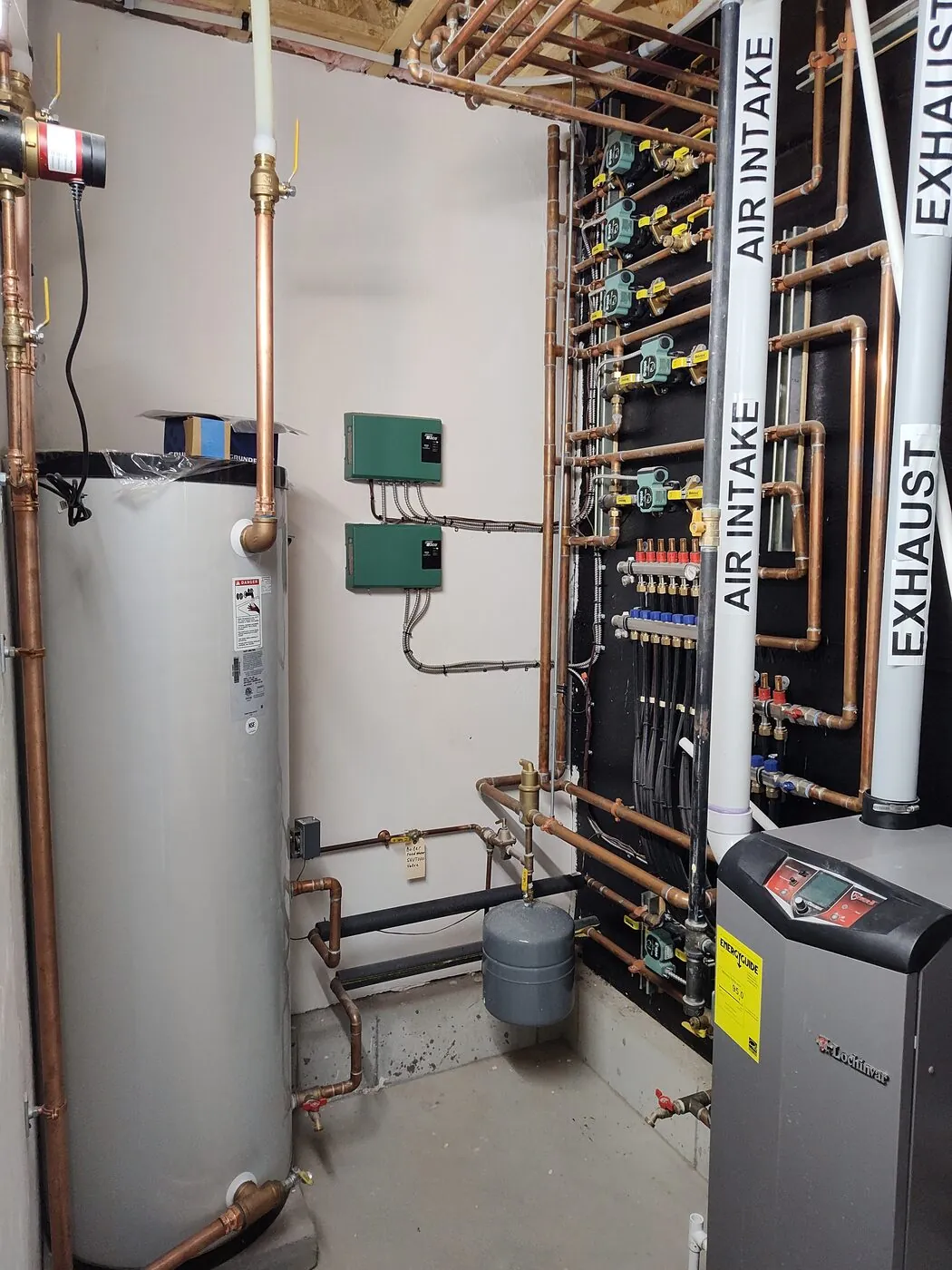
Yes — in Massachusetts, replacing a water heater is permitted, inspected work. It counts as plumbing work (and gas work too if the unit is gas-fired), so it requires a permit pulled by a licensed plumber or gas fitter, and the finished installation is inspected to confirm it meets code. A water heater can look like a simple swap, but it ties into your home's water, gas and venting systems — which is exactly why the state treats it as licensed, permitted work rather than a casual DIY project.
Why a water heater needs a permit at all
It's easy to picture a water heater as "just a tank," but a proper install touches several safety-critical details:
- The temperature & pressure (T&P) relief valve and its discharge line — the feature that keeps a tank from becoming dangerous if it over-pressurizes. It has to be installed and routed correctly.
- Venting and combustion air on gas units — improper venting can let exhaust and carbon monoxide back into the home.
- An expansion tank where the system requires one to handle thermal expansion on a closed system.
- Correct gas, water and electrical connections, plus seismic/strapping and clearances where they apply.
The permit-and-inspection process exists so an independent inspector verifies those details are right — not just that hot water comes out of the tap. These requirements come from 248 CMR 10.00 (Uniform State Plumbing Code), the statewide code every plumbing installation in Massachusetts has to meet.
Who pulls the permit
For plumbing and gas work, Massachusetts generally requires a licensed plumber or gas fitter — licensed by the Board of State Examiners of Plumbers and Gas Fitters — to do the work and pull the permit. That's a key difference from some general construction, where a homeowner can sometimes file their own permit. With a water heater — especially a gas one — the right path is to have a licensed contractor handle the install and the paperwork together. When we replace a water heater or boiler, pulling the permit and scheduling the inspection is part of the job, not an add-on you have to chase.
The real risk of skipping it
Plenty of water heaters get swapped without a permit — and the problems usually show up later:
- At resale. Unpermitted work can surface during a home sale or inspection and stall the deal until it's corrected.
- With insurance. If an unpermitted install fails and causes damage, a claim can get complicated.
- For safety. The most common shortcuts — a missing relief-valve discharge, sloppy venting, no expansion tank — are exactly the things an inspection is meant to catch.
If you've inherited an unpermitted install, it's not the end of the world — a licensed plumber can assess it and bring it up to code.
Your local plumbing inspector and building department enforce the details, so specifics can vary by town. The constant across Massachusetts: water-heater work should be done by a licensed plumber/gas fitter, permitted and inspected. The same logic applies to any remodel plumbing.
The bottom line
A permit isn't red tape — it's the paper trail that says your water heater was installed safely and to code, by someone licensed to do it. When we install one, you get the unit sized right, the permit pulled, the inspection passed, and documentation you can hand to a buyer or insurer down the road. If you're also weighing tankless versus a tank, that decision and the permit both get handled in the same visit.
Frequently asked questions
Do you need a permit to replace a water heater in Massachusetts?
Yes. It's plumbing work (and gas work if it's gas-fired) that requires a permit and an inspection. The permit is pulled by a licensed plumber or gas fitter, and the finished job is inspected to confirm it meets code.
Can a homeowner pull the permit themselves?
For plumbing and gas work, Massachusetts generally requires a licensed plumber or gas fitter to perform the work and pull the permit. The safest, code-compliant path is to have a licensed contractor handle both.
Is an inspection really required?
Yes. A local inspector verifies proper connections, the T&P relief valve and discharge, correct venting on gas units, and an expansion tank where required.
What if a water heater was installed without a permit?
Unpermitted work can cause problems at resale, complicate insurance claims, and hide safety issues. A licensed plumber can assess an unpermitted install and bring it up to code.
Need a water heater replaced — permitted, inspected and done right?