
Related: bathroom & kitchen plumbing · gas fitting & appliance hookups · why your remodel needs a permit
On a renovation, most of the plumbing ends up behind the walls before anyone sees the finished rooms. That hidden work decides whether the new apartment stays trouble-free for years or starts leaking inside a tiled wall. In this Boston apartment we did all of it. We started with the rough-in, when the walls were open, and finished with the final connections after the tile, cabinets and appliances were in. The plumbing and gas inspections were both signed off at the end.
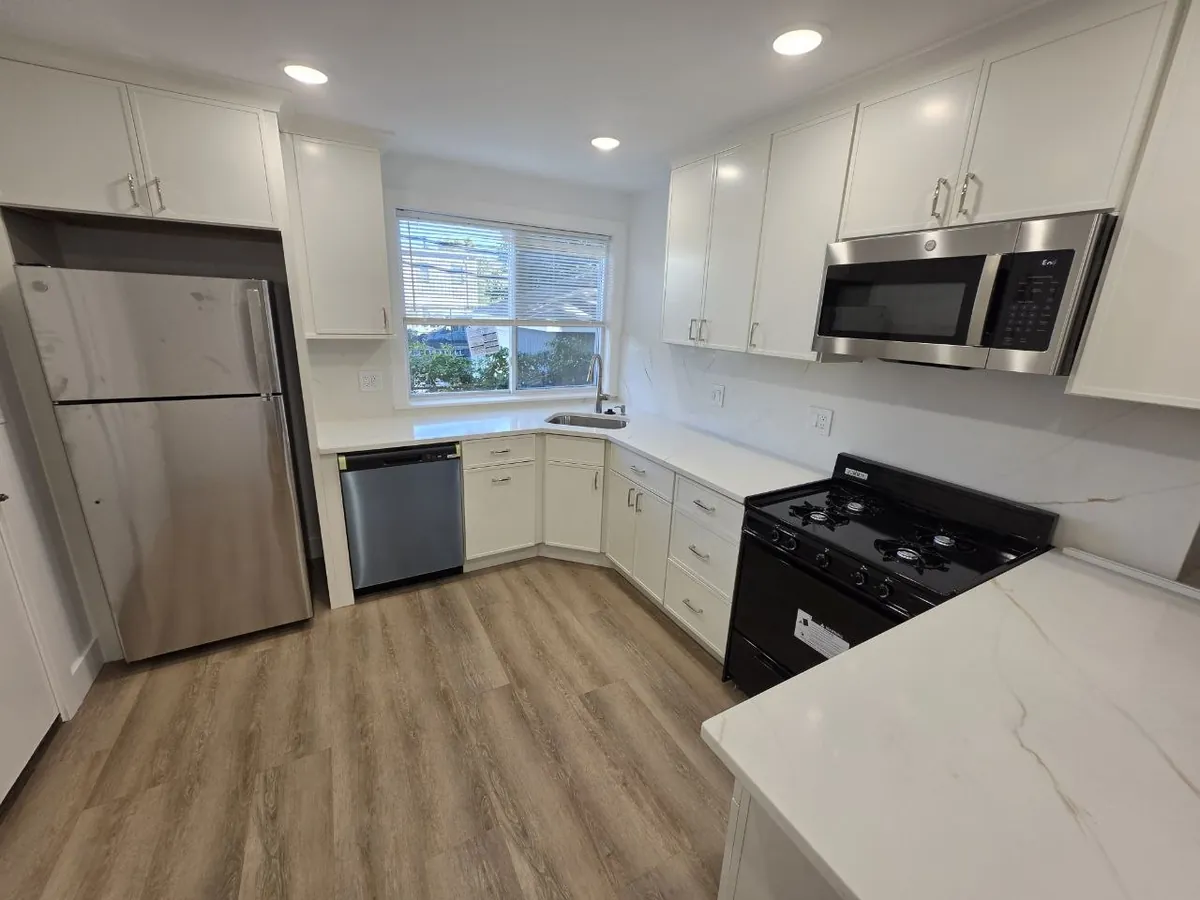
The scope: every room with water or gas in it
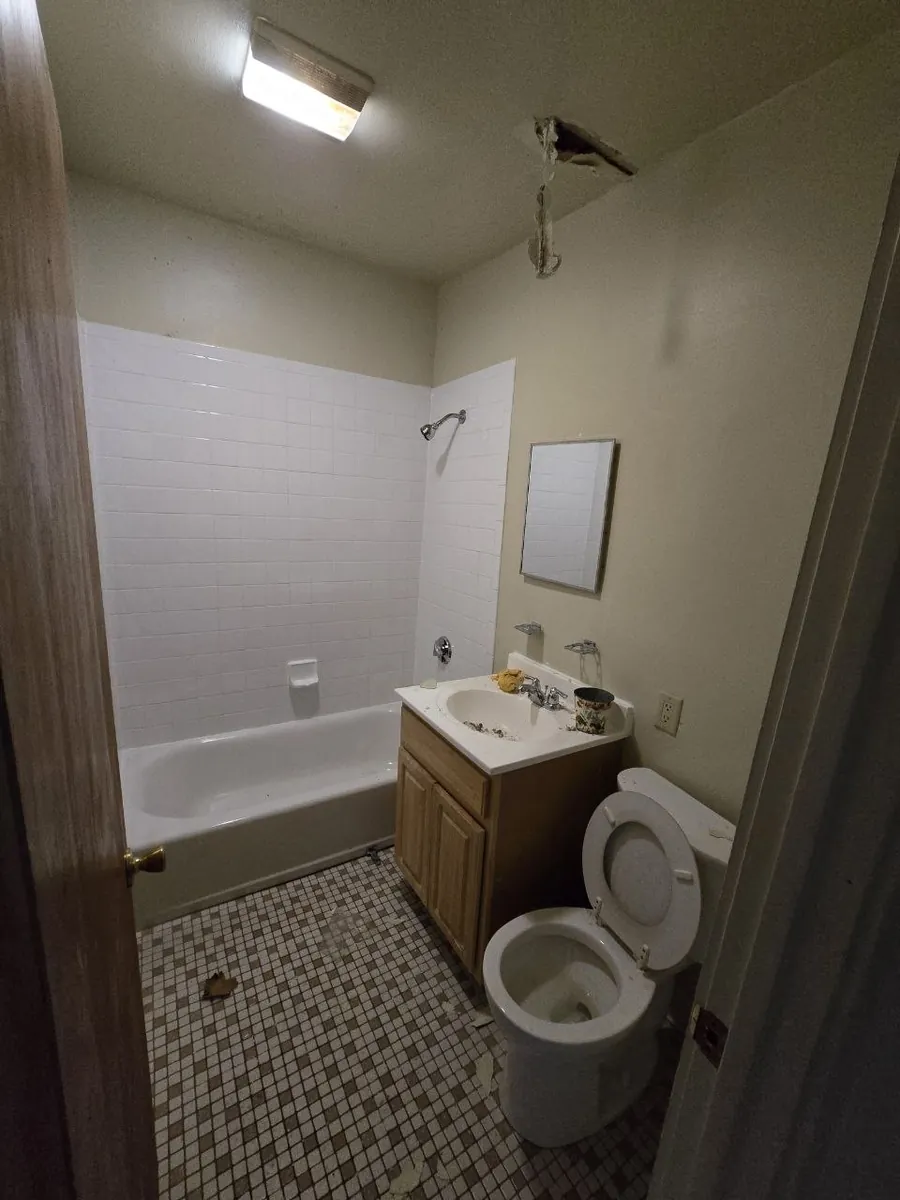
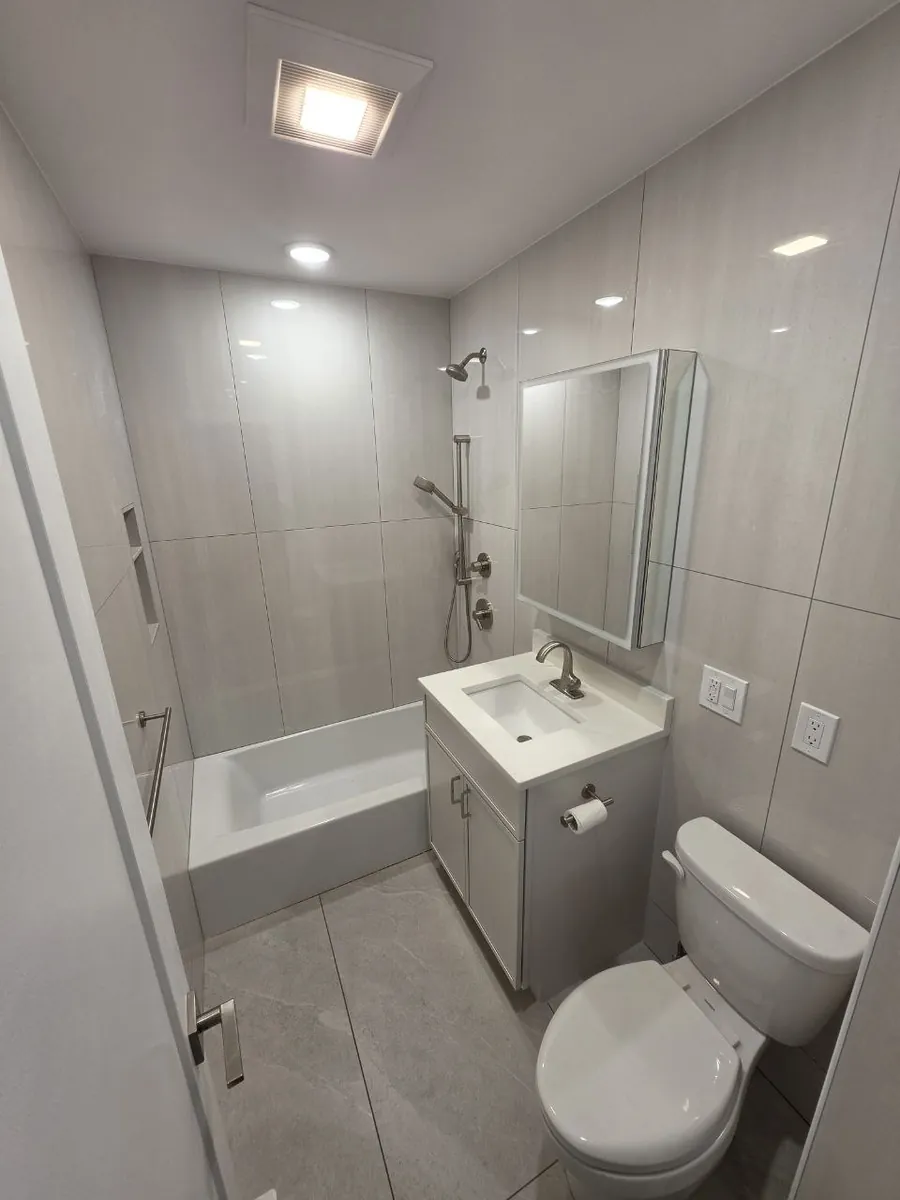
- Complete bathroom remodel. New supply and drain piping for the tub/shower, the vanity and the toilet.
- Fixture relocations. The new layout moved fixtures away from where the old piping was, so the supply, drain and vent lines had to be rerouted to suit.
- New shower valve. Installed during rough-in, set to the finished wall depth before the tile went up.
- Updated kitchen plumbing. New sink and dishwasher connections to match the new cabinet layout.
- New gas range connection. Gas piping to the range location, with a shutoff and a leak-tested connection.
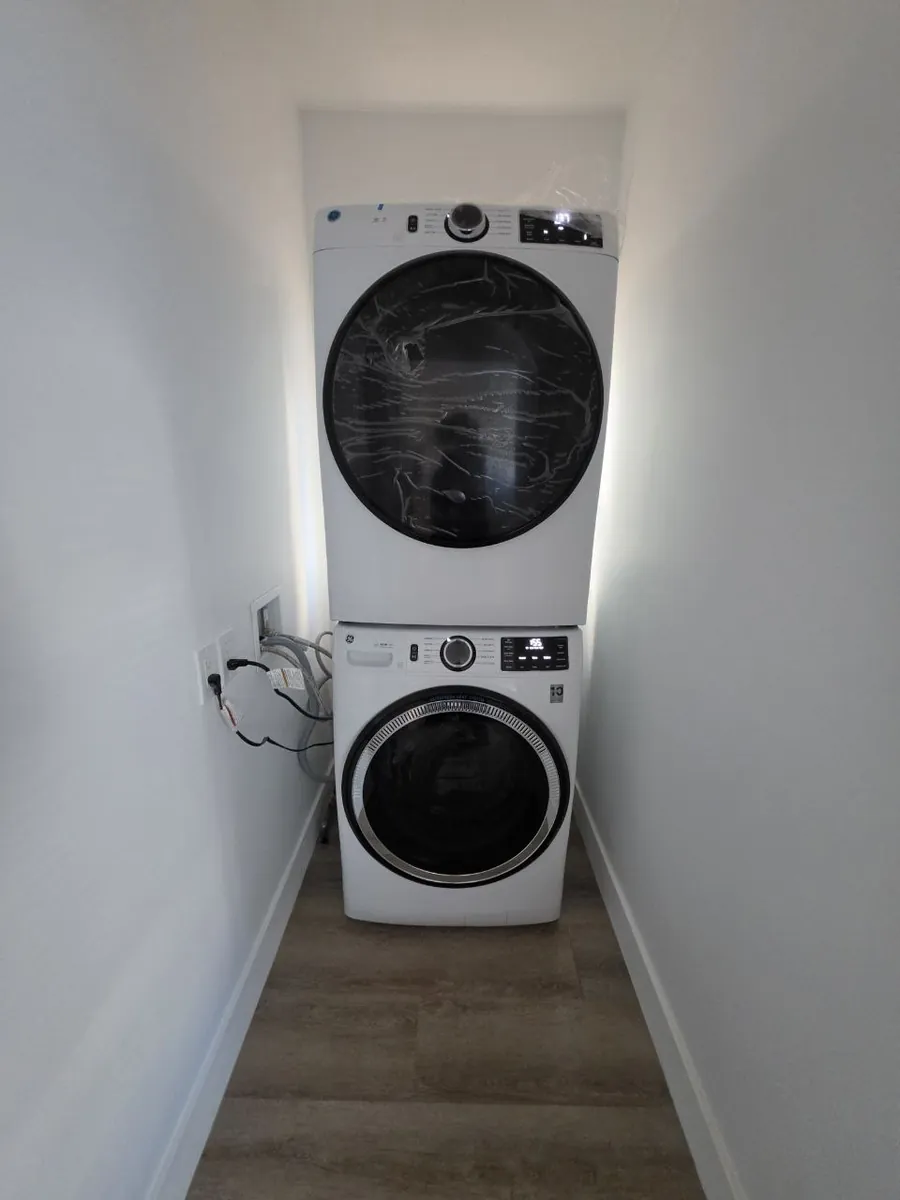
- Laundry hookups. Water supply and drain for the washer, plus a new gas line for the gas dryer.
Rough-in: the part nobody sees
Rough-in is the stage where the new piping goes into the open walls and floors: supply lines, drains, vents, the shower valve body and the gas piping. Most of the decisions that matter are made here. If a drain doesn't have enough pitch, it will clog. If a vent is undersized, the traps will gurgle. If the shower valve is set at the wrong depth, the trim won't fit once the tile is on. Once the walls are closed, fixing any of these means tearing out new finishes.
That's why the rough-in is inspected before the walls are closed. The inspector sees the piping while it's still exposed and tested, and nobody has to take anything on faith.
Why the shower valve matters
On a remodel, it's tempting to keep an existing shower valve and just change the trim. We replaced it. A new valve body is set to the depth of the new wall, and it gives the shower the anti-scald protection the plumbing code requires. That keeps the water temperature steady when someone flushes the toilet or starts the dishwasher. It also means the valve behind the new tile won't be the first thing to fail.
Gas: range and dryer
This unit has two gas appliances, the kitchen range and the dryer. Each one needs piping sized for its load, an accessible shutoff valve, and a connection that is pressure-tested and leak-checked before it goes into service. Gas work is inspected on its own, separately from the plumbing, so the job wasn't finished until the gas inspection was signed off too.
The result
Every water and gas line in the apartment is new. The final plumbing and gas inspections passed, and the unit was ready for its new occupants. For an owner or landlord, signed-off permits matter for more than the inspection itself. They show at resale, at refinancing and in insurance claims. Unpermitted renovation work is something buyers' inspectors and lenders do ask about. More on why the permit matters →
Our role
- Rough-in plumbing for the new bathroom, kitchen and laundry layout, including the fixture relocations.
- Installed a new shower valve at the finished wall depth.
- Ran gas piping to the range and the dryer, then pressure-tested and leak-checked it.
- Finish plumbing: tub/shower trim, vanity, toilet, kitchen sink, dishwasher and washer hookups.
- Gas appliance connections for the range and dryer.
- Pulled the plumbing and gas permits and saw both through to final inspection, which passed.
IS Plumbing LLC handles renovation plumbing and gas work from rough-in to final inspection across Greater Boston, MetroWest and Worcester County, MA. We work for homeowners, landlords and general contractors. If you're planning a bathroom, kitchen or full-unit renovation, get in touch or call +1 (774) 486-0909.