
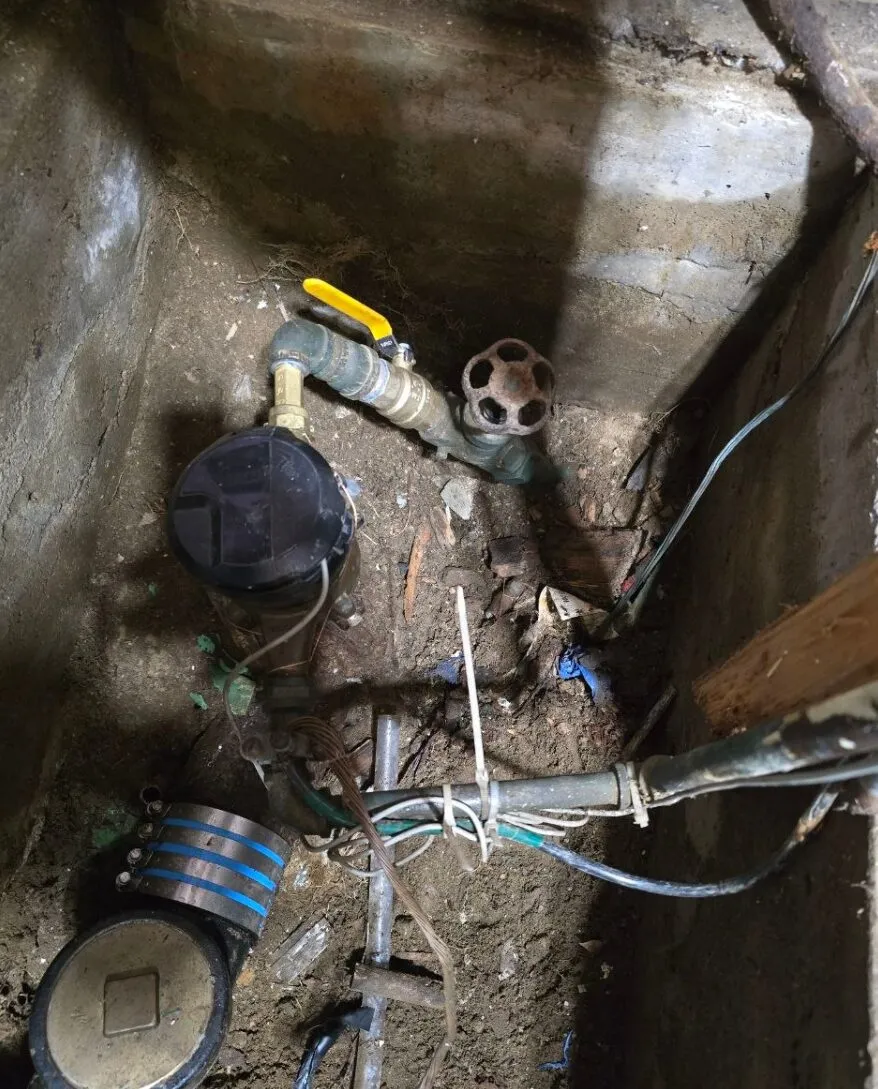
A lead service line is the pipe that carries water from the main in the street into your house, made of lead. They were common in older Massachusetts housing, and some are still in use around Boston and its suburbs. Lead pipes can leach lead into drinking water — there is no safe level of lead exposure, especially for children — so if you have one, it should come out. The good news: in Boston, the Boston Water and Sewer Commission (BWSC) will replace a qualifying private lead line at no cost to the owner, and most other water systems in the region are working through their own replacement programs.
Where the service line is — and who owns it
Your water service has two halves. The public side runs from the water main to roughly your property line, and it belongs to the water system. The private side runs from the property line into your basement, up to the meter — and in Massachusetts, that part is the property owner's responsibility. A line can be lead on one side and copper on the other, which is why a full replacement covers both.
How to check if your pipe is lead
Go to the basement and find where the water pipe comes through the foundation wall, before the water meter. Then look at the pipe between the wall and the meter:
- Lead: dull gray, soft, and often with a bulging, rounded joint where it connects. If you gently scratch it with a key or coin, it shows bright, shiny silver underneath. A magnet won't stick to it.
- Galvanized steel: gray but hard; a scratch stays dull, and a magnet sticks.
- Copper: the color of a penny where you scratch it; a magnet won't stick.
- Plastic: usually blue, black or white.
Two caveats. First, you only see the last foot or two of the line — the buried part can be a different material, so a copper stub in the basement doesn't guarantee there's no lead outside. Second, don't scratch hard enough to damage the pipe. BWSC's own guidance is that the most reliable way to know is to have a licensed plumber inspect the line, or to check with the water system, which keeps records of service materials and may do a visual inspection. In Boston, the BWSC Lead Hotline is 617-989-7888.
One more thing worth knowing: under the federal Lead and Copper Rule, every water system had to publish a service line inventory by October 2024. If you're outside Boston, check your town's water department website — many let you look up your address.
Replacing a lead line in Boston: the no-cost program
BWSC runs what it calls the No Cost Private Lead Replacement Incentive Program. In BWSC's words, "the lead replacement will come at no cost to the owner." BWSC already pays for any lead on the public side of the line. Per BWSC's program brochure, a property generally qualifies when:
- the water service is two inches or smaller and contains lead, and
- the property's water and sewer account is active and not delinquent.
BWSC decides eligibility, so call the Lead Hotline to confirm before planning anything. If you've seen older figures online — a $1,000 or $4,000 credit — those describe earlier versions of the program and are out of date.
Outside Boston
Most Greater Boston towns buy their water from the MWRA, which funds local lead line replacement through interest-free loans to its member communities; each town runs its own program on top of that. Worcester and other non-MWRA systems run their own. Terms vary a lot from town to town — some cover the private side, some share the cost, some only replace the public side. Start with your water department: ask what your inventory says about your address, and what they'll cover.
The pressure on water systems is increasing. EPA's Lead and Copper Rule Improvements, finalized in 2024, would require most water systems to replace their lead service lines within ten years, with compliance starting November 1, 2027. The rule is being challenged in federal court, but replacement programs in Massachusetts are moving ahead either way.
Replace the whole line, not half of it
Replacing just one side of a lead line — say, the public side during street work — can disturb the remaining lead and temporarily raise lead levels at your tap. The right outcome is lead gone from main to meter. If the public side has been replaced and the private side hasn't, that's the moment to finish the job. Galvanized pipe that sat downstream of a lead line is also treated as needing replacement under the federal rules, because it can hold onto lead.
On our side, a private-side replacement means confirming the material, coordinating with the water department, pulling the permit, and running a new copper service from the property line to a new meter connection and shutoff — either in a trench or pulled through underground, depending on the yard, the driveway and the soil. After the work, we flush the line and clean the faucet aerators, which can catch loose particles.
What to do until it's replaced
BWSC's guidance for homes that may have lead:
- Flush before you drink. If water has sat for more than six hours, run the cold tap until it's noticeably colder — longer (about a minute) if you know you have a lead line.
- Use cold water only for drinking, cooking and baby formula. Hot water dissolves lead faster. Boiling does not remove lead.
- Use a filter certified for lead if you want an extra layer — check that it's certified to remove lead, not just "improve taste."
- Test your water through a state-certified lab; BWSC puts the cost at usually $15–$50. A blood test is the only way to know a child's exposure — talk to your pediatrician.
Lead solder is a separate issue. Copper pipe joints made before 1986 may use lead solder — dull gray at the joints, shiny when scratched. If your house is that old and has original copper, it's another reason to consider whether a repipe makes sense.
Frequently asked questions
How do I know if my house has a lead water service line?
Look at the pipe where it enters through the basement wall, before the meter. Lead is dull gray, soft, shows shiny silver when gently scratched, and a magnet won't stick. The buried section can differ, so the most reliable answer comes from a licensed plumber's inspection or your water system's records. In Boston, call the BWSC Lead Hotline at 617-989-7888.
Does Boston pay to replace lead service lines?
Yes. Boston Water and Sewer Commission's No Cost Private Lead Replacement Incentive Program replaces qualifying private-side lead lines at no cost to the owner, and BWSC pays for the public side. Per its brochure, the service must be two inches or smaller and the water and sewer account active and not delinquent. BWSC determines eligibility.
Who owns the water service line in Massachusetts?
The water system owns the public portion from the main to roughly the property line. The private portion from the property line into the building is the property owner's responsibility.
Does boiling water remove lead?
No. Boiling does not remove lead. Use cold water for drinking and cooking, flush the tap after water has sat for six hours or more, and use a filter certified for lead removal if you want extra protection.
Is there a deadline to replace lead service lines?
EPA's Lead and Copper Rule Improvements would require most water systems to replace lead service lines within ten years, with compliance beginning November 1, 2027. The rule is under legal challenge, but Boston and many Massachusetts communities already run replacement programs.
Think you have a lead service line? We inspect and replace water services across Greater Boston, MetroWest and Worcester County.