
Boiler already off and the house getting cold? Start with our 8 boiler checks for no heat →
Most of the no-heat calls we get in December and January come from boilers that haven't been looked at in years. Usually the part that failed was showing signs long before: a burner coated in debris, an igniter worn thin, a condensate trap half full of sludge. A yearly service is how you find those things in September instead of at 2 a.m. in a cold snap. Here's what a proper boiler tune-up includes, what's different on a modern condensing boiler versus an older cast-iron one, and what you can keep an eye on yourself.
Why once a year matters
A boiler burns fuel all winter, and every season leaves something behind. On a gas boiler that's dust and debris pulled in with the combustion air, scale on the heat exchanger, and wear on the ignition parts. On a high-efficiency boiler it's also the acidic condensate the boiler produces, which carries debris into the trap and drain. None of it stops the boiler right away. It just makes the burner work harder, the heat exchanger pass less heat to the water, and the controls more likely to lock out on a cold night.
There are three good reasons to stay on a yearly schedule:
- Safety. A boiler that isn't burning cleanly, or a vent that has come loose, can put carbon monoxide into the house. The service checks both.
- Reliability. Worn parts get replaced on a warm day, on your schedule, not in an emergency.
- Fuel and warranty. A clean burner and heat exchanger use less fuel for the same heat. Many manufacturers also list yearly service by a qualified technician in their maintenance instructions, so skipping it can complicate a warranty claim. Check the manual for yours.
What we check on a gas boiler tune-up
The exact list depends on the boiler, but on a typical residential gas boiler the service covers:
- Burner and ignition. We take the burner out or open it up, clean it, and inspect the igniter and flame sensor. Electrodes wear and get coated, and a weak flame signal is one of the most common reasons a boiler locks out.
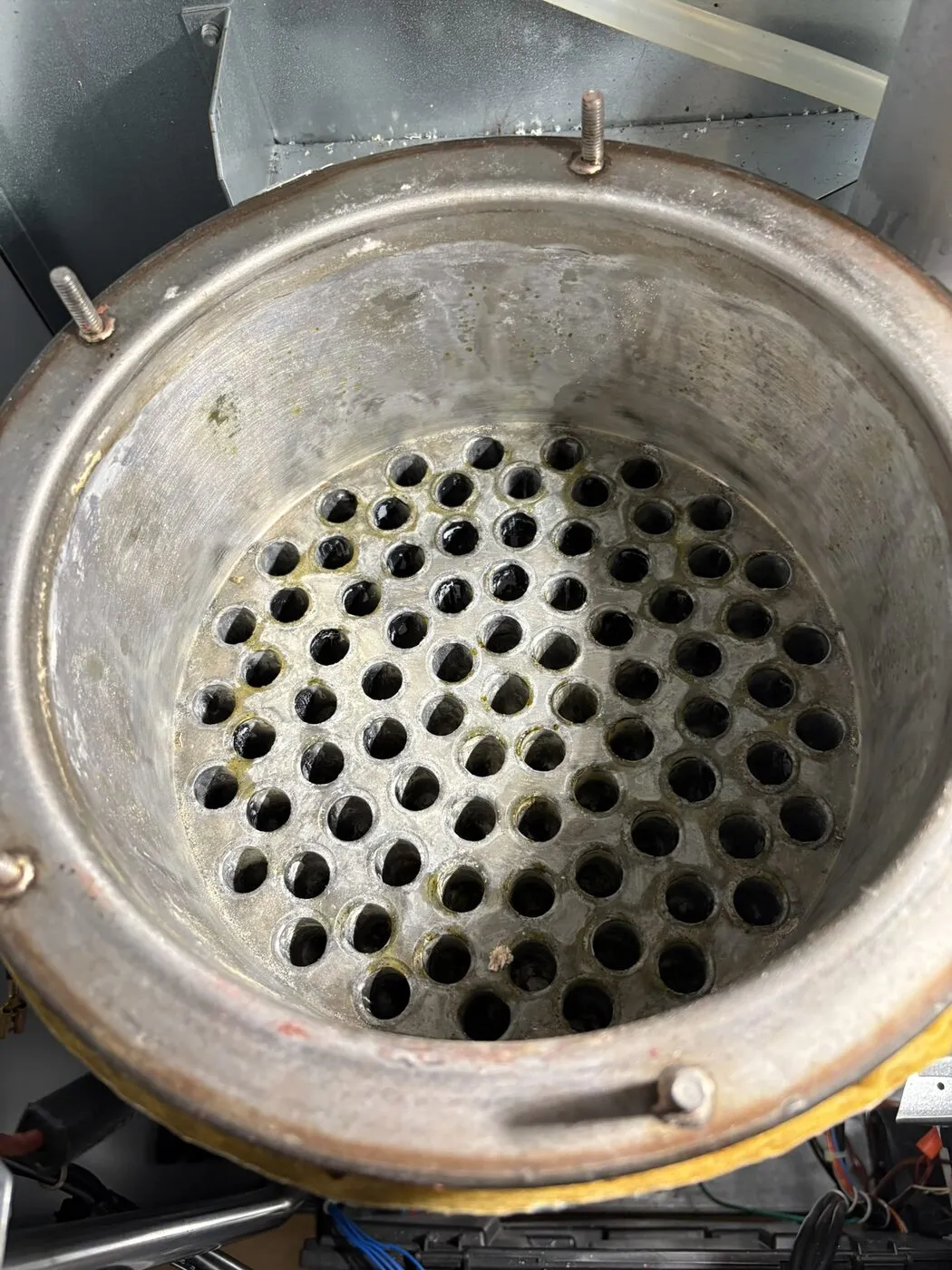
- Heat exchanger. We clean the combustion side so the heat goes into the water instead of up the vent.
- Flame and combustion. We check how the boiler is burning once it's back together, not just whether it lights.
- Venting. We check the vent pipe or chimney connection, joints and supports, and on direct-vent boilers the outdoor intake and exhaust terminations.
- Gaskets and seals. When the burner door comes off, its gasket gets inspected and replaced if it's damaged or the manufacturer calls for a new one.
- Safety controls. High-limit, pressure and flow switches, low-water cutoff where there is one, and the pressure relief valve.
- The rest of the system. System pressure, the expansion tank, circulator pumps, zone valves, and any leaks or corrosion at the near-boiler piping.
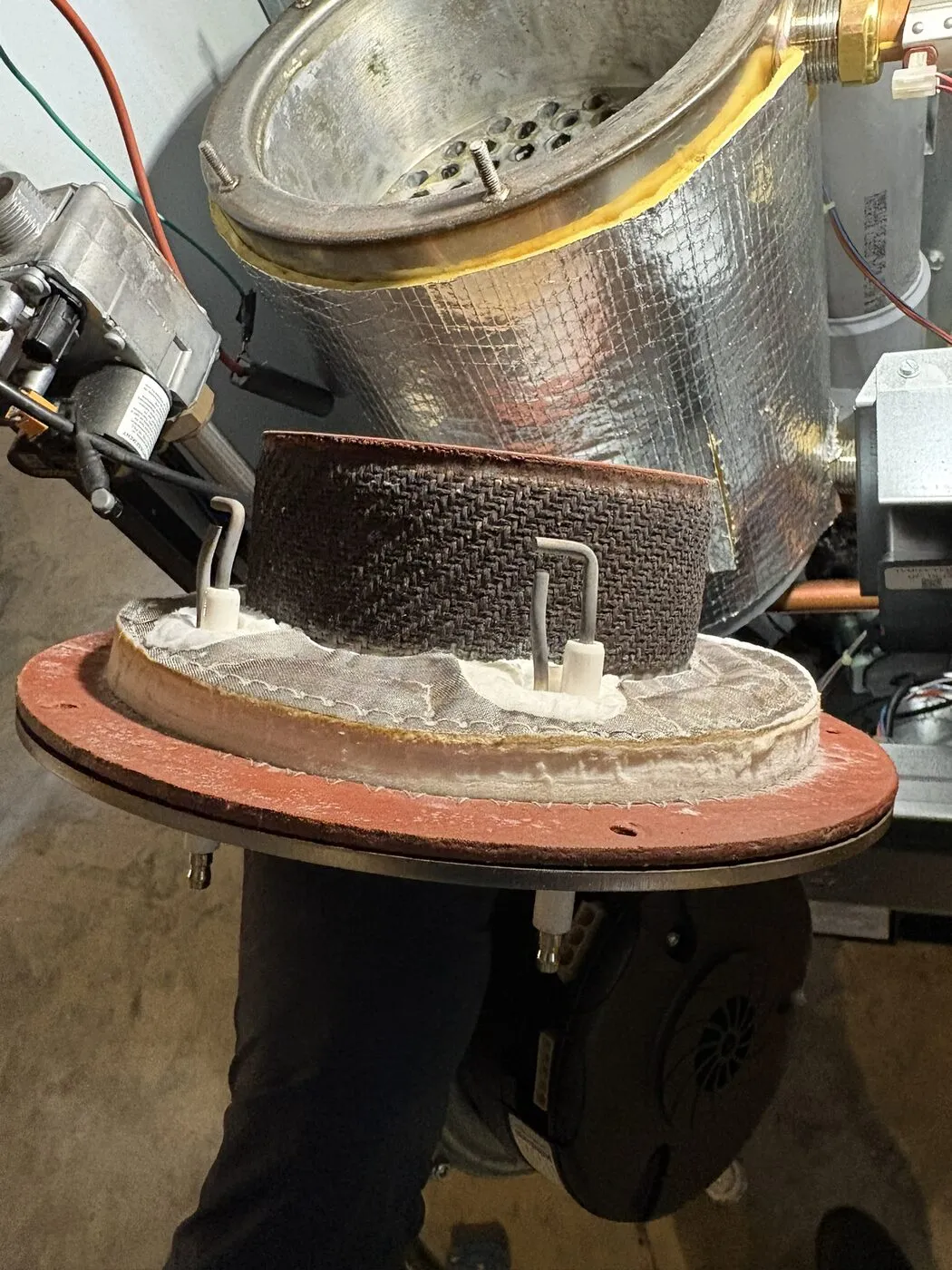
High-efficiency (condensing) boilers need a bit more
Modern wall-hung and floor-standing condensing boilers squeeze extra heat out of the exhaust by cooling it until water condenses out. That's where the savings come from (more in why a condensing boiler pays for itself), and it adds a few items to the service:
- Condensate trap and drain. The trap collects debris along with the water. A clogged trap can back condensate up into the boiler and shut it down.
- Condensate neutralizer. If the boiler has one, the media gets checked and replaced when it's used up, because condensate is acidic.
- Heat exchanger passages. The passages are narrow, so a little buildup makes a bigger difference than on an old cast-iron boiler.
- Intake and exhaust. Both pipes run outside, usually through a side wall. Leaves, nests and snow drifts block them more often than people expect.
Older cast-iron boilers
Plenty of Greater Boston homes still heat with a cast-iron boiler that's 20 or 30 years old, with atmospheric burners and a chimney vent. These are simple and durable, and they still need a yearly look:
- Burners and flame. We clean the burner tubes and watch the flame. A steady blue flame is what we want. Lazy, yellow or lifting flames mean something needs attention.
- Draft and chimney. The boiler relies on the chimney to carry exhaust away, so we check the draft hood and vent connector, and whether the chimney liner needs looking at.
- Steam boilers also get the water level, sight glass and low-water cutoff checked. Our radiator and boiler pressure guide covers what homeowners should watch on steam systems.
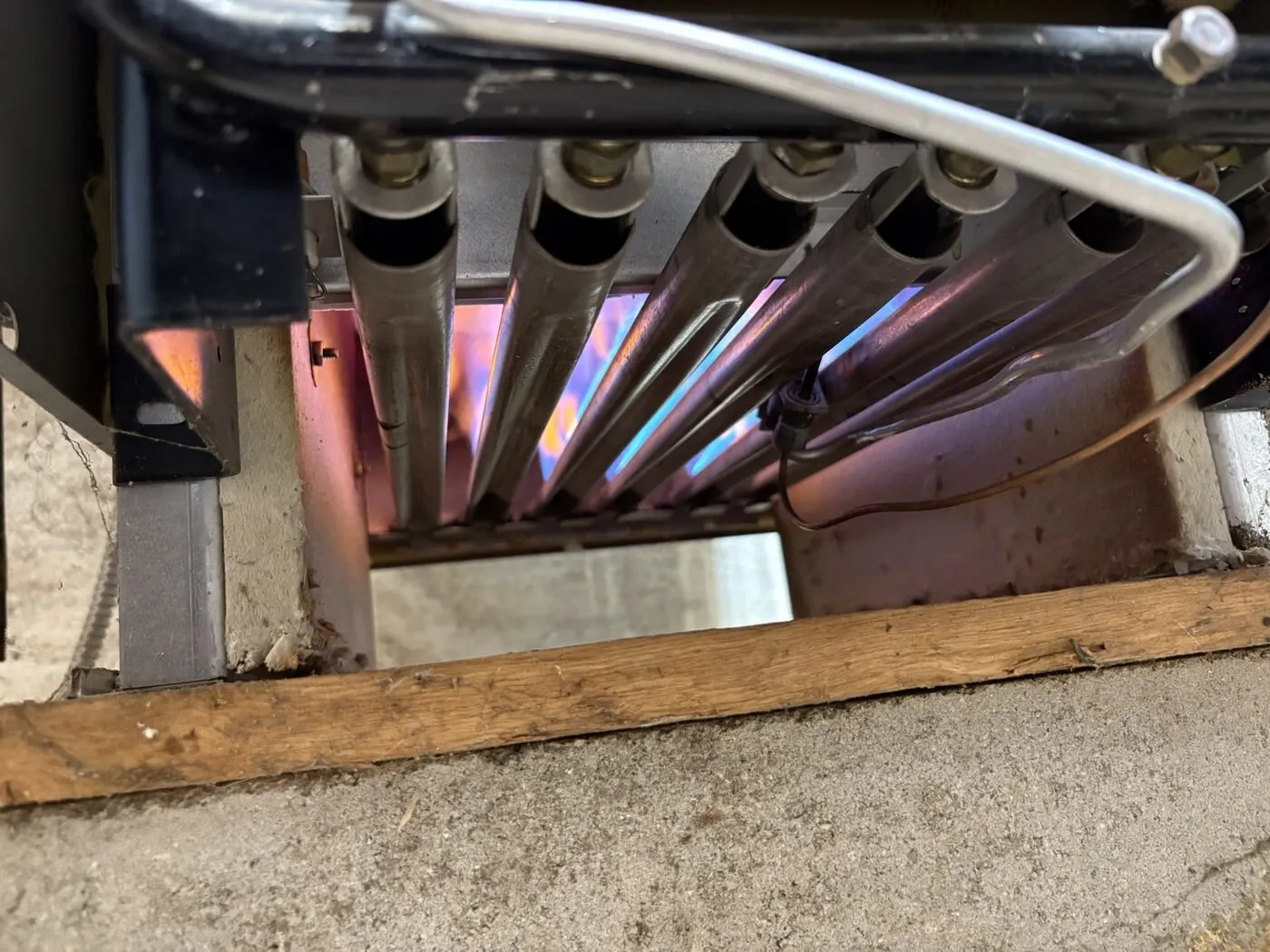
If an old boiler needs repairs every year, the service is also a good moment to talk about whether it's worth keeping. Sometimes it is. We'll tell you honestly either way.
What you can check between services
- Pressure gauge: on most hot-water systems, roughly 12 to 15 psi cold. If you keep having to add water, or it climbs toward 30 psi, call.
- Leaks and drips around the boiler, the relief valve discharge pipe and the near-boiler piping.
- Outdoor vents on a high-efficiency boiler: keep snow and leaves clear of the intake and exhaust.
- Carbon monoxide alarms: test them, and replace them at the age the manufacturer lists. Massachusetts requires CO alarms in homes with fossil-fuel heating.
- Keep the area clear. Storage boxes, laundry and dust around a boiler are a fire risk and starve it of combustion air.
- Error codes or lockouts: write the code down before resetting. One reset is fine. If it keeps happening, it needs a service call.
Anything involving the burner, gas valve, gas piping or venting is for a licensed professional. In Massachusetts, gas work is done by a licensed gas fitter.
Frequently asked questions
How often should a boiler be serviced?
Once a year. Gas and oil boilers both build up deposits on the burner and heat exchanger over a heating season, and the safety controls should be tested regularly. Many boiler manufacturers also list annual service by a qualified technician as part of their maintenance instructions, so check the manual and warranty for yours.
When is the best time to schedule boiler maintenance?
Late summer or early fall, before you need the heat. If a part is worn, there is time to order it while the house is still warm. By the first cold snap, service calls are mostly no-heat emergencies and the wait is longer.
What is included in a boiler tune-up?
On a gas boiler: inspecting and cleaning the burner, the ignition and flame-sensing electrodes and the heat exchanger, checking the flame and combustion, inspecting the vent or chimney connection, testing safety controls and the relief valve, checking system pressure and the expansion tank, and on condensing boilers cleaning the condensate trap and checking the neutralizer. Gaskets and seals that are disturbed get inspected and replaced when needed.
My boiler works fine. Do I still need a tune-up?
Yes. Most of what a tune-up catches does not show up as a problem until it fails: a weak igniter, a burner clogged with debris, a corroded vent joint, a waterlogged expansion tank, a relief valve that will not open. A dirty burner and heat exchanger also burn more fuel for the same heat.
Can I service my own gas boiler?
Not the burner, gas valve or venting. In Massachusetts, work on gas piping and gas appliances is done by a licensed gas fitter. Homeowners can safely watch the pressure gauge, keep the area around the boiler clear, check that outdoor vent and intake pipes are not blocked by snow, and test their carbon monoxide alarms.
Book your boiler service
We service gas boilers, high-efficiency condensing boilers and older cast-iron and steam systems across Greater Boston and MetroWest, and we replace them when it no longer makes sense to keep fixing them. See our boiler and water heater services, or call the 24/7 emergency line if your heat is already out.
Time for your boiler's yearly service, or something already sounds off? Call, or request a quote for a boiler tune-up.