
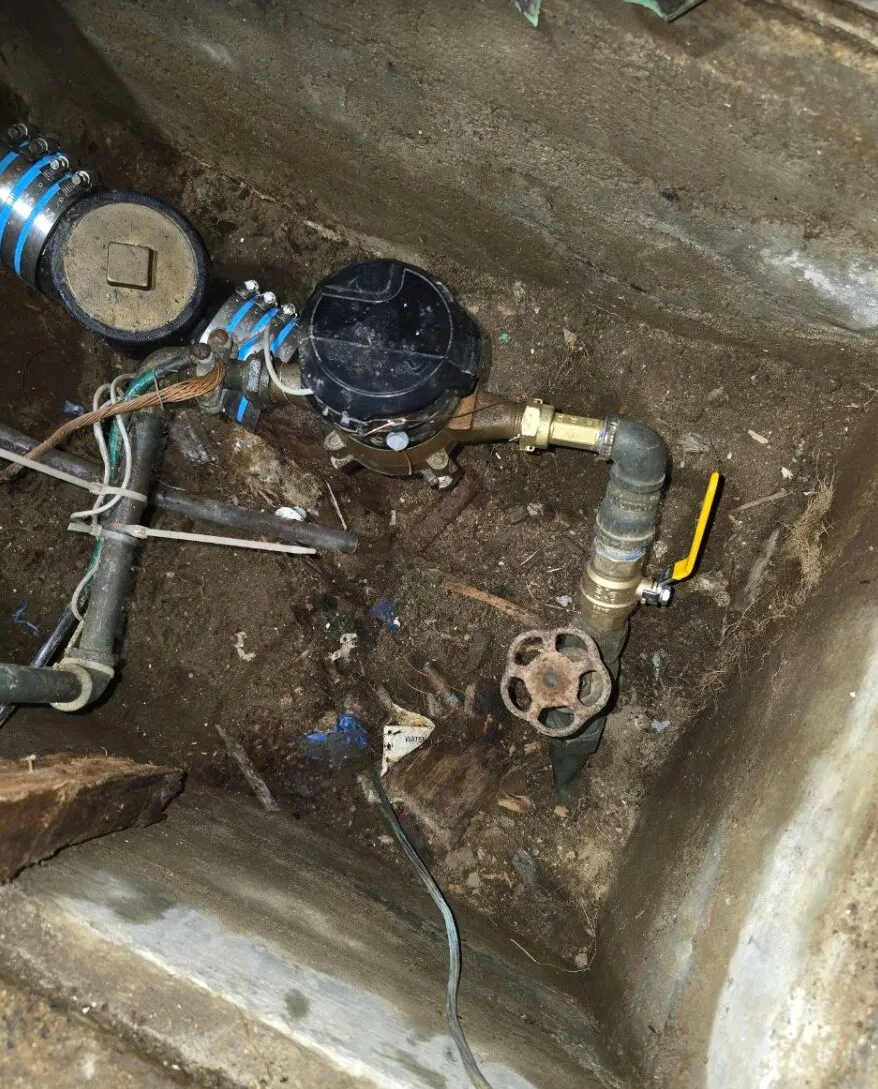
In most Massachusetts houses the main water shutoff is in the basement, on the wall facing the street, where the water line comes in through the foundation, right next to the water meter. Turn it clockwise to close it. Test it once a year so you know it works. If it won't close in an emergency, call your town's water department to shut the curb stop at the street, and call a plumber.
Where to look
- House with a basement: follow the water meter. The incoming water pipe comes through the foundation wall, usually on the street side, and there's normally a valve on each side of the meter. The one on the house side is the one you use.
- No basement or a slab: check the utility room or closet near the water heater, under the kitchen sink, or in a crawl space access.
- Outdoor meter pit: in some towns, and in many rural properties, the meter and shutoff sit in an underground pit with a cover in the yard. These can be awkward to reach, and they're where we often find seized valves.
- Condo or apartment: your unit may have its own shutoffs, often behind an access panel, in a closet or near the water heater. If you can't find one, ask the building manager or association now, not during a leak.
Once you've found it, put a bright tag on it and make sure everyone in the house knows where it is.
Gate valve or ball valve?
The handle tells you what you have:
- Round wheel handle — a gate valve. It takes several turns to close. Older homes have these, and they're the ones that fail: they seize from mineral buildup, the stem can snap, or the gate inside can break off so the handle turns but the water keeps running.
- Straight lever handle — a ball valve. A quarter turn closes it: lever in line with the pipe is open, lever across the pipe is closed. Ball valves are far more reliable, and they're what we install when we replace a main shutoff.
How to test it (once a year)
- Open a faucet somewhere in the house.
- Close the main valve slowly, by hand. Don't use a wrench or a cheater bar on an old gate valve. If it won't move by hand, stop. Forcing it is how stems break.
- Check that the faucet stops running. A trickle that keeps going means the valve isn't sealing.
- Open the valve again fully. Turn a gate valve all the way open, then back about a quarter turn.
- Look at the valve for a few minutes afterwards. A small drip from around the stem can come from the packing nut, which is common on old gate valves after they've been moved.
If it's stiff, won't close fully, or starts leaking, don't wait for the emergency. Have it replaced while it's a scheduled job.
What to do if it won't close during a leak
- Call your water department. There's another valve, the curb stop, on the service line near the street or property line. It's operated with a long curb key, and in most towns it belongs to the water department. Their emergency line can send someone to close it. Many departments don't allow homeowners to operate it, and if the curb stop gets damaged, the repair can become your expense.
- Close fixture shutoffs if the leak is at a toilet, sink or appliance supply — the small valves under fixtures can isolate it without the main.
- Turn off the power to any area where water is reaching electrical outlets or equipment, if you can do it safely.
- If you have a water heater, turn off its power or gas once the water is shut off, so it isn't heating an empty tank.
- Call a plumber — our 24/7 emergency line answers around the clock.
This exact situation happened to a homeowner in the Worcester area. The water meter tailpiece failed, and the service shutoff next to it had corroded and seized and couldn't stop the water. We coordinated with the local water department to shut off the supply at the street, replaced the failed valve and connection, pressure-tested everything, and had the water back on the same day.
See the real job: emergency water meter and shutoff valve repair → · a leak-corroded supply pipe and valve replaced →
Replacing an old main shutoff
Replacing a seized gate valve with a full-port ball valve is a short job once the water is off. Because the main valve sits upstream of everything in the house, the water usually has to be shut off at the curb stop first, which means coordinating with the water department. Who owns which part varies by town. The water meter typically belongs to the water department, and the piping and valves on the house side are usually the owner's responsibility. Ask your water department if you're not sure.
While you're at the meter, take a look at the pipe coming through the wall. If it's a dull gray metal that scratches shiny silver and a magnet won't stick to it, it may be lead. Our guide to lead service lines in Greater Boston explains how to check and what replacement programs exist.
Two more habits worth having in a New England house: shut the main off when you leave for more than a few days in winter, and keep the area around it clear. See how to keep your pipes from freezing for the rest of the winter routine. If you'd like the main shutoff replaced or checked, that's part of our general plumbing service.
Frequently asked questions
Where is the main water shutoff valve in a house?
In most Massachusetts homes it's in the basement, on the wall facing the street, where the water line comes through the foundation, next to the water meter. Homes without a basement often have it in a utility closet near the water heater. Some properties have the meter and shutoff in an outdoor meter pit.
Which way do I turn the main water shutoff?
Clockwise to close. A round-handled gate valve takes several turns. A lever-handled ball valve takes a quarter turn: lever across the pipe means closed, lever in line with the pipe means open.
What do I do if my main water shutoff won't close?
Don't force it with a wrench. Call your town's water department to close the curb stop at the street, close the fixture shutoffs near the leak if you can, turn off power to any wet area if it's safe to do so, and call a plumber to replace the valve.
Can I turn off the curb stop myself?
In most towns the curb stop belongs to the water department, and many don't allow homeowners to operate it. Call the department's emergency line instead. If the curb stop is damaged while being forced, the repair can become the owner's expense.
How often should I test my main water shutoff valve?
Once a year. Close it slowly by hand, make sure the water actually stops, then open it fully again. If it's stiff, won't seal, or leaks afterwards, have it replaced while it isn't an emergency.
Main shutoff stuck or leaking? We replace shutoff valves and repair water services across Greater Boston, MetroWest and Worcester County.