
Sink already backed up? Jump to what to do if the sink clogs →
Plumbers know the Friday after Thanksgiving as one of the busiest days of the year for drain calls. The pattern is almost always the same: the kitchen sink was fine on Wednesday, the cooking and cleanup on Thursday put more grease and food scraps down the drain than it sees in a month, and by Friday morning the sink is full of gray water that won't go anywhere. Most of these clogs are avoidable once you know what the drain can't handle.
Why kitchen drains clog on Thanksgiving
A kitchen drain is a fairly small pipe, usually 1½ inches, that runs from the sink trap through the wall and often a long way across the basement before it reaches the main line. Three things happen at once on a holiday:
- Grease goes in hot and comes out solid. Turkey drippings, gravy and butter are liquid in the pan. Once they reach the cooler pipe in an outside wall or an unheated basement, they cool, stick to the pipe and catch everything that comes after them.
- Starchy food turns into paste. Potato peels, rice, stuffing and pasta swell with water and pack into the trap like wet cement.
- Volume. The dishwasher, the disposal and the sink all drain into the same line, often for hours without a break. A partial clog that has been building for months finally closes off.
What never goes down the kitchen drain
- Fats, oils and grease of any kind: turkey fat, pan drippings, gravy, bacon grease, butter, frying oil. Running hot water or adding dish soap doesn't help; it only moves the grease further down the line before it hardens.
- Potato peels. The single most common thing we pull out of kitchen drains in late November.
- Rice, pasta, stuffing and bread. They keep absorbing water after they're down the drain.
- Fibrous scraps such as celery, onion skins, corn husks and squash skins. The strings wrap around the disposal and form mats in the pipe.
- Bones, turkey skin and fruit pits. A disposal isn't built for them.
- Coffee grounds and eggshells. They don't jam the disposal, but they settle in the trap and the line like sand.
What to do with the grease instead: let it cool, pour it into an empty can or jar with a lid, and put it in the trash. Wipe roasting pans and greasy plates with a paper towel before they go in the sink or dishwasher. Some towns also collect used cooking oil at the transfer station; check with yours.
Using the garbage disposal on a holiday
A disposal grinds food small; it doesn't make it disappear. Everything it grinds still has to travel through the same small pipe. To keep it working through the day:
- Scrape plates into the trash first and use the disposal only for the small bits that are left.
- Run cold water, not hot, before, during and for 15 to 20 seconds after grinding. Cold water keeps any fat solid so it gets chopped up and carried away instead of coating the pipe.
- Feed it a little at a time. A full chamber of scraps jams the disposal and sends a slug of food into the trap.
- Don't run the disposal and the dishwasher at the same time. In most kitchens the dishwasher drains through the disposal. Let one finish before you start the other.
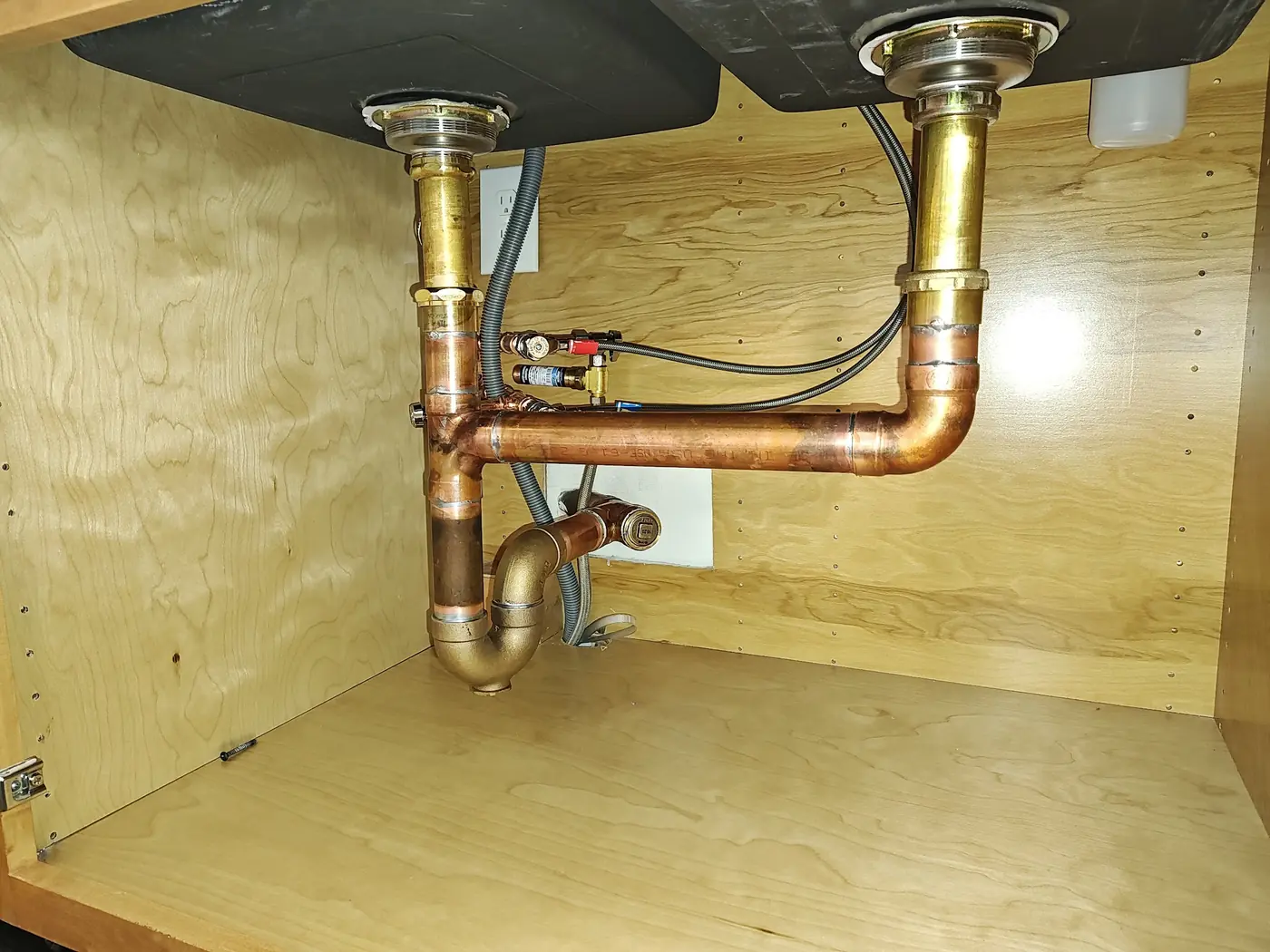
If your home is on a septic system, which is common in towns like Sudbury, Wayland, Grafton and Millbury, go easy on the disposal all year and especially on holidays. Ground food and grease add solids to the tank and shorten the time between pumpings. The EPA's septic care guide recommends limiting disposal use for the same reason.
Don't forget the guest bathroom
Extra guests mean extra flushes and back-to-back showers, often in a bathroom that doesn't get much use the rest of the year. A few simple things help:
- Put a small trash can with a lid in every bathroom, so guests aren't tempted to flush wipes, paper towels or other products. "Flushable" wipes don't break down the way toilet paper does.
- Leave a plunger next to each toilet. Guests are far more likely to deal with a slow toilet quietly than to come and ask for one.
- Space out showers by 10 minutes or so if you have a tank water heater, so it can recover and so the drains aren't overloaded.
- Test a seldom-used bathroom a day ahead. Flush the toilet and run the sink and tub for a minute. A slow drain is easier to deal with on Wednesday than with a full house.
What to do if the kitchen sink clogs
- Stop running water into the sink, and don't start the dishwasher. More water just raises the level.
- If you have a disposal, check it first. If it hums but doesn't turn, switch it off. With the power off, put the hex key that came with it into the socket on the bottom center of the unit and work it back and forth until it turns freely. Pull out anything loose with tongs, never your hand. Then press the red reset button on the bottom and try again with cold water running.
- Plunge the right way. Use a flat-bottomed sink plunger, not the toilet plunger. On a double sink, block the other drain with a wet rag or stopper held down firmly, or the pressure just comes back up the other side. Keep a few inches of water in the sink so the plunger seals, and give it 10 to 15 strong strokes.
- Skip the chemical drain cleaner. It rarely clears a grease and food clog in a kitchen line, it can damage the disposal and older pipes, and it leaves a sink of caustic water that can splash on you when you plunge.
- Check the trap only if you're comfortable doing it. Put a bucket underneath first. Many plastic traps have slip nuts you can loosen by hand. If the trap is metal and soldered or glued, leave it alone.
When it isn't just the sink: if water comes up in a tub, shower or basement floor drain when you run the kitchen sink or the dishwasher, or several fixtures are slow at once, the clog is probably in the main line. Stop using water in the house and call. That isn't a plunger job, and running more water can flood the basement. Our 24/7 emergency page has the next steps.
A clog that keeps coming back
If the kitchen sink clogs every holiday, or every few months, the problem usually isn't just what went down on Thursday. Common causes are a long, nearly flat drain run across the basement with too little slope, years of grease built up inside an old galvanized or cast iron line (see our guide to cast iron drain problems), or a disposal and dishwasher hooked up in a way that makes the drain work harder than it should. A camera inspection shows which one it is, and the fix may be a proper cleaning of the line or replacing a section of pipe.
Frequently asked questions
Can I pour turkey grease down the sink if I run hot water with it?
No. Hot water only carries the grease a few feet further, into the colder pipe in the wall or basement, where it cools, hardens and coats the pipe. Let the grease cool, pour it into a can or jar, and put it in the trash. Wipe greasy pans with a paper towel before washing them.
Can potato peels go down the garbage disposal?
Better not, especially in large amounts. Potato peels turn into a thick starchy paste that packs the trap and the drain line. On Thanksgiving, when pounds of potatoes get peeled at once, put the peels in the trash or compost instead.
Should I use a chemical drain cleaner on a clogged kitchen sink?
We don't recommend it. Chemical cleaners rarely clear a grease or food clog in a kitchen line, and they leave a sink full of caustic water that splashes when you plunge or that a plumber then has to work in. They can also damage a garbage disposal and older pipes. Try a plunger first, and call if that doesn't work.
My garbage disposal hums but doesn't spin. What should I do?
Turn it off right away so the motor doesn't burn out. With the switch off (and ideally the unit unplugged or the breaker off), use the hex key that came with it in the socket on the bottom center of the unit and work it back and forth to free the jam. Remove any loose object with tongs, never your hand, wait a few minutes, press the red reset button on the bottom, and try again with cold water running.
How do I know if it's a main sewer line clog and not just the sink?
If only the kitchen sink is slow, the clog is usually in the sink trap or the kitchen branch line. If water comes up in a tub, shower or basement floor drain when you run the sink or the dishwasher, or several fixtures are slow at once, the blockage is likely in the main line. Stop using water in the house and call a plumber.
When to call a plumber
Call if plunging doesn't clear the sink, if water backs up into other fixtures or a floor drain, if the disposal leaks or won't run after a reset, or if the same drain keeps clogging. We clear kitchen and main drain lines, repair and replace garbage disposals, and fix the kitchen side of plumbing repairs across Greater Boston and MetroWest. For main line and sewer problems, see our sewer and drain services.
Kitchen sink or disposal backed up, or a drain that's been slow for weeks? Call before the guests arrive, or request a quote.