
Newton is one of the best places in Massachusetts to own an old house, and one of the busiest for plumbers. About half of the homes in the city were built before 1940: Victorians in Newtonville and West Newton, Colonials and Tudors in Newton Centre, Waban and Chestnut Hill, and two-families in Nonantum. A lot of the original plumbing, or parts of it, is still in the walls. Here's what we usually find in those homes, which problems are worth fixing first, and how to plan the work if you're renovating or buying.
1. Galvanized supply pipes
From about 1900 to the 1950s, water supply lines were usually galvanized steel. It's strong, but it rusts from the inside. After 70 years or more the opening inside the pipe can be half its original size, or less.
- Signs: weak flow upstairs, a shower that goes cold or weak when someone runs the kitchen faucet, brown or rusty water after the water has been off, and leaks at threaded joints.
- How to check: gray pipe with threaded fittings in the basement. A magnet sticks to it.
- What we do: replace it with copper or PEX. Many Newton homes are already a mix: copper where someone remodeled a bathroom, galvanized everywhere else. Partial repairs keep the galvanized sections as the bottleneck. Our guide to signs you need repiping covers the other warning signs.
2. The water service from the street
Newton is a full MWRA community: the water in the mains comes from the Quabbin and Wachusett reservoirs, treated by the MWRA. But the pipe that runs from the city's main under your yard into the basement can be as old as the house. In pre-war homes it's often lead or galvanized.
- How to check: look at the pipe where it comes through the foundation wall, before the meter. Lead is dull gray and soft, shows bright silver when you scratch it gently with a key, and a magnet won't stick to it. See our detailed guide on lead service lines in Greater Boston.
- Check the city's records. Every water system had to publish a service line inventory, and Newton has run its own lead service replacement program for years. Contact the city's water department to ask what your address shows and what the program currently covers. We can confirm the pipe material in person and replace the private side.
3. Cast iron drains, and the sewer line under the yard
Drain pipes in older Newton homes are usually cast iron inside the house, and cast iron or clay outside to the street. Cast iron lasts a long time, often 75 to 100 years, but it rusts from the inside and cracks along the bottom of horizontal runs.
- Inside the house: rust stains or seeping at joints on the main stack, slow drains on several fixtures, sewer smell in the basement. See 6 signs cast iron drains are failing.
- Under the yard: Newton's mature trees are beautiful, and their roots find every crack and joint in an old sewer line. Recurring backups in the lowest drain, usually a basement floor drain or toilet, are the classic sign.
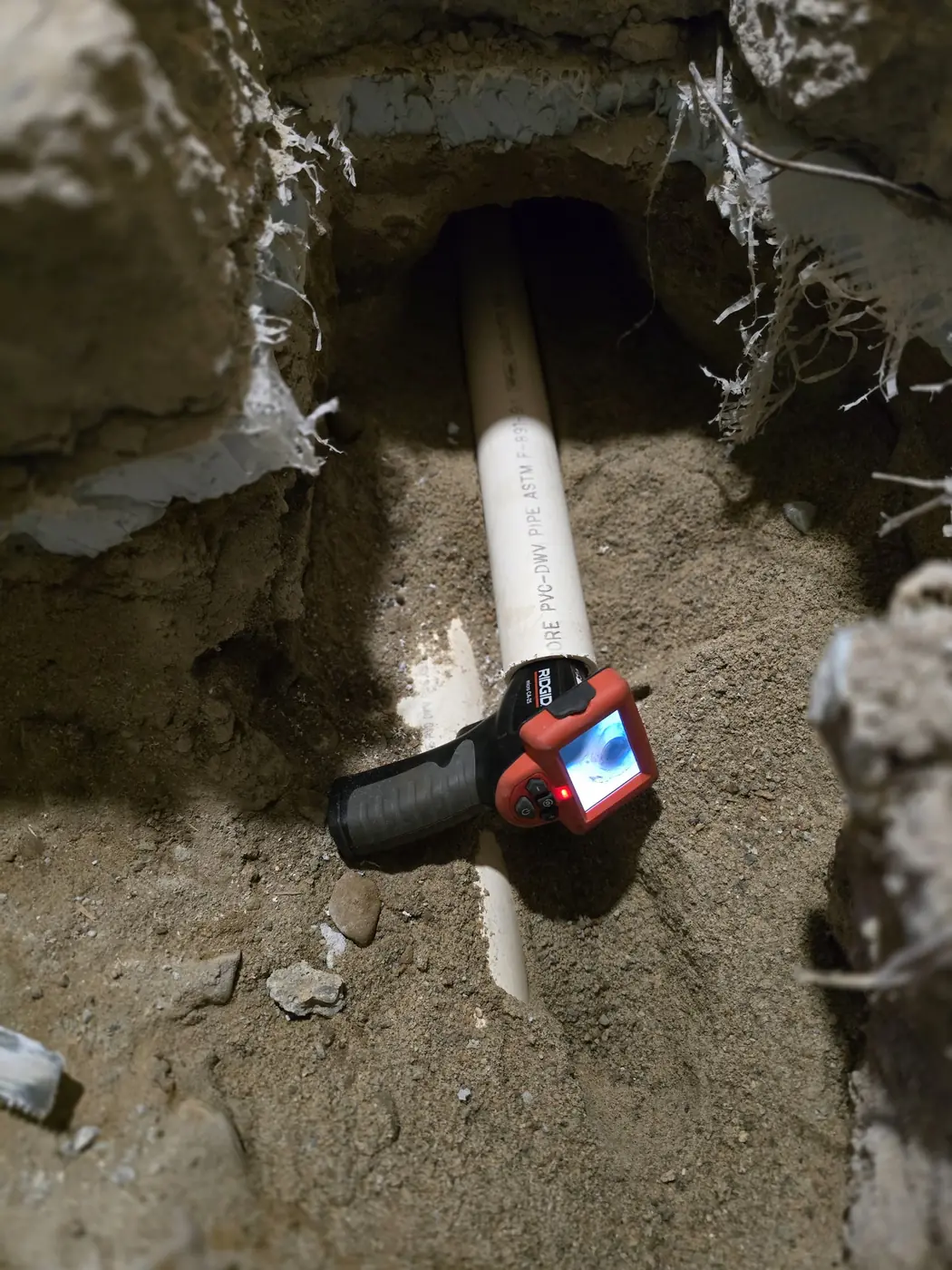
- A camera inspection shows exactly what you have before anyone digs. We run a camera through the line, record the video, and show you the condition and depth of each problem area.
4. Old heating systems: steam and gravity hot water
Many older Newton homes still heat with steam, or with old "gravity" hot-water systems that originally had no pump and very large pipes. Both work well when they're maintained, and both are easy to get wrong when a boiler is replaced.
- Steam: banging pipes, radiators that never get hot, and vents that spit water usually come from pipe pitch, failed vents or a boiler that's the wrong size for the radiators. A steam boiler has to be sized to the radiators in the house, not to the square footage.
- Hot water: an oversized old boiler running on a converted gravity system can often be replaced with a smaller, high-efficiency unit and an indirect water heater. See why a condensing boiler pays for itself and our guide to bleeding radiators and boiler pressure.
White wrap on old heating pipes? In homes built before about 1980, the insulation on old steam and hot-water pipes, and on some old boilers, often contains asbestos. It's generally safe while it's intact. Don't cut, sand or tear it. Asbestos removal is regulated in Massachusetts, and on our jobs a licensed asbestos abatement contractor removes it before we work on those pipes. Plan for that in the budget and the schedule of a boiler replacement or a remodel.
5. Shutoff valves that don't shut off
Old houses often have a main valve that hasn't been turned in decades, and few or no shutoffs under sinks and toilets. An old gate valve can seize open, or break when someone finally forces it during a leak. Replacing the main with a quarter-turn ball valve and adding fixture shutoffs is one of the cheapest upgrades in an old house, and it makes every future repair faster. See how to find and test your main shutoff.
6. Old gas piping
Older homes often have gas lines from several eras: original black iron, extensions added for a dryer or a range, and lines to appliances that are long gone. Capped dead-end lines, missing shutoffs at appliances and old flexible connectors are common findings. Any gas work in Massachusetts needs a licensed gas fitter and a permit. If you ever smell gas, follow our 5 steps for a gas smell.
Renovating an old Newton home: plan the plumbing first
The cheapest time to replace old plumbing is when the walls and ceilings are already open. A few things we recommend on every renovation in an older house:
- Camera the drains before demolition. If the cast iron stack or the sewer line needs replacing, it's far easier to do it before new floors and tile go in.
- Replace galvanized supply lines back to the main, not just in the room you're working on.
- Add shutoffs at every fixture and a new main valve.
- Plan the permit. In Newton, plumbing and gas permits go through the city's Inspectional Services Department, and in Massachusetts they have to be pulled by a licensed plumber or gas fitter, not the homeowner or a general contractor. Rough-in work is inspected before the walls close. See why every remodel should be permitted.
Buying an older home in Newton: what to check
A standard home inspection looks at what's visible. For a pre-war house, we'd add:
- A sewer camera inspection from the house to the street.
- The water service material where it enters the basement, and what the city's inventory says.
- How much galvanized pipe is left in the supply lines.
- The age and type of the boiler and water heater, and whether the boiler is sized to the house.
- Pipe insulation that may contain asbestos.
- Permit history for recent bathroom and kitchen remodels, from the city.
None of these has to stop a purchase. They're the difference between a repair you budget for and a surprise in the first winter.
Frequently asked questions
Does my Newton home have a lead water service line?
Possibly, if the house was built before the 1950s and the service has never been replaced. Look at the pipe where it comes through the basement wall before the meter: lead is dull gray, soft, and shows shiny silver when you scratch it gently with a key, and a magnet won't stick to it. The buried part can be a different material, so the City of Newton's service line inventory and a plumber's inspection are more reliable. Ask the city's water department what it currently covers before you plan a replacement.
Why is the water pressure low in my old Newton house?
In most pre-war homes the cause is old galvanized steel pipe. It rusts from the inside, and over decades the opening narrows until faucets upstairs barely run, especially when two fixtures are on at once. Brown water after the water has been off is another sign. Replacing the galvanized supply lines with copper or PEX usually fixes it. A partly closed or failing main valve can cause the same symptom, so we check that first.
Do I need a permit for plumbing work in Newton?
Yes, for almost everything beyond a simple repair: replacing a water heater or boiler, moving or adding fixtures, repiping, gas work and remodels. In Massachusetts the permit has to be pulled by a licensed plumber or gas fitter, not the homeowner. In Newton, permits go through the city's Inspectional Services Department, and the work is inspected before walls are closed and again at the end.
Should I get a sewer camera inspection before buying an older home in Newton?
Yes, if the house is more than about 50 years old or has large trees near the sewer line. A standard home inspection doesn't look inside the sewer pipe between the house and the street. A camera inspection shows roots, cracks, sagging sections and old pipe materials, and the repair can cost thousands of dollars. It's much better to know before you sign.
Is the white wrap on old heating pipes asbestos?
It may be. In homes built before about 1980, the white, gray or tan insulation on old steam and hot-water pipes, and on some old boilers, often contains asbestos. It's generally safe if it's intact and left alone. Don't cut, sand or tear it. Asbestos removal is regulated in Massachusetts, and on our jobs a licensed asbestos abatement contractor removes it before we work on those pipes.
Work with a plumber who knows old houses
We work in every Newton village, from Newton Corner and Nonantum to Waban, Newton Highlands and Chestnut Hill. We do repiping, water service and sewer replacement, camera inspections, steam and hot-water boiler replacement, and remodel plumbing, all under Newton permits and inspected. See our Newton plumbing services, or call the 24/7 emergency line for a leak or no heat.
Buying, renovating or just tired of low pressure and slow drains in an older Newton home? Call, or request a quote for an inspection.