
Leaving tomorrow? Jump to the 10-minute checklist →
Most of the worst water damage we see in winter happens in a house nobody is in. A pipe that would have dripped for a minute while you were home runs for four days while you're away. A boiler that shuts off on the second night of a trip means a cold house, frozen pipes and a burst when it thaws. Christmas, New Year's and February vacation are the riskiest weeks of the year for it, and most of it is preventable with an hour of preparation before you leave.
This checklist is for a trip of a few days to a few weeks. For a seasonal home that will sit empty all winter, see the section on long absences at the end.
A week before: check the heat
The heating system is what keeps the pipes from freezing, so it's the most important thing to check.
- Has the boiler or furnace been serviced this season? If not, book it now. A tune-up catches the worn igniter, clogged nozzle or failing pump that will otherwise quit at the worst time.
- Change the thermostat batteries. A thermostat with dead batteries stops calling for heat, and the house slowly goes cold.
- Check the oil or propane level and schedule a delivery if it's below a quarter. An oil burner that runs out of fuel usually needs a service call to restart, even after the delivery.
- If you have a high-efficiency boiler or furnace with white plastic vent pipes out the side of the house, ask the person checking on the house to keep snow away from them after a storm. A buried vent shuts the boiler down.
- Check the boiler pressure gauge. If you've been topping up the water, or the relief valve drips, get that fixed before you go. Our guide to boiler pressure and bleeding radiators explains the readings.
Set the thermostat to 55°F or higher
The thermostat measures the air around it, usually in a hallway or living room in the middle of the house. A pipe inside an exterior wall, under a kitchen sink on an outside wall, or above an unheated garage can be 15 or 20 degrees colder. 55°F is the minimum we recommend. Go to 58 or 60 if you've ever had a pipe freeze, have a bathroom or kitchen on a cold corner, or the trip covers a cold snap.
If you have a smart thermostat, check that the away or eco setting doesn't drop below that, and turn on its low-temperature alert so it messages you if the house gets cold.
Should you shut off the main water valve?
For most homes, yes. With the main closed, a burst pipe or a failed washing machine hose can only leak the water already in the pipes, a few gallons instead of thousands. Find the valve, usually where the water line comes through the basement wall next to the meter, and make sure it actually closes. Our guide on finding and testing your main shutoff covers gate and ball valves and what to do if yours is stuck.
Don't shut off the main if: you have steam heat with an automatic water feeder (the boiler needs to add water as it runs, and without it the low-water cutoff will shut the boiler down and the house will cool off), you have a home fire sprinkler system fed from the same line, or a boiler or water treatment system that needs a water supply. In those homes, close the valves to the washing machine, the outdoor faucets and the fixtures instead, and ask us about the rest.
With a hot-water (hydronic) boiler, closing the main is normally fine for a trip of a few days or weeks. The heating system is a sealed loop that doesn't use house water while it runs.
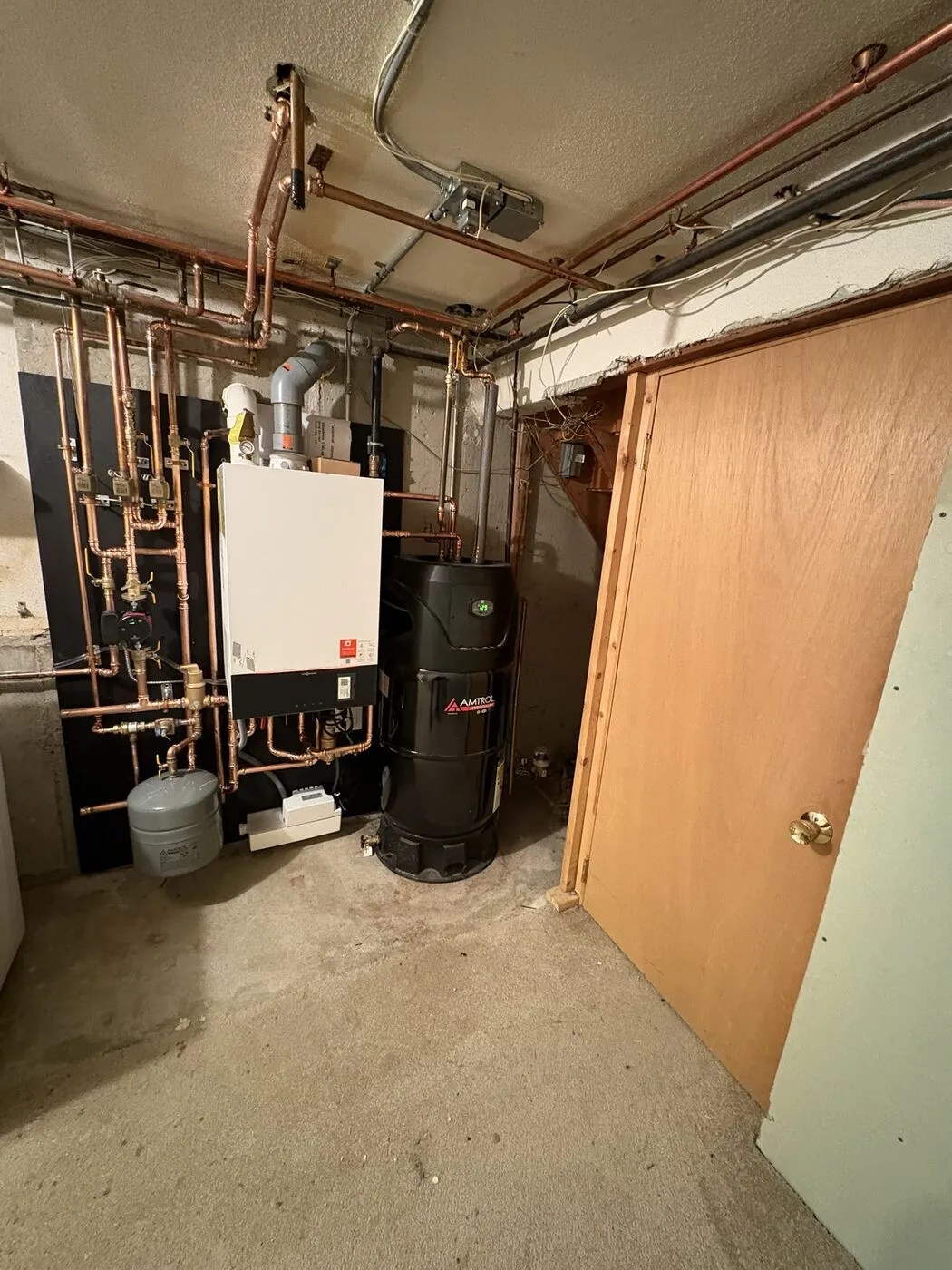
The water heater
- Gas tank water heater: for a week or more, turn the gas control to its "Vacation" or "Pilot" setting. The pilot stays lit, so it's easy to turn back on.
- Electric tank: turn it off at its breaker. Turn it back on only when the tank is full of water.
- Heat pump water heater: most have a vacation mode. Set it for the number of days you'll be gone.
- Hot water from the boiler (an indirect tank or a coil in the boiler): leave the boiler on. It also heats the house.
If the tank is more than 10 to 12 years old or has rust or moisture at the bottom, see our guide on a leaking water heater before you leave it unattended.
The 10-minute checklist before you walk out
- Thermostat at 55°F or higher, with fresh batteries.
- Main water valve closed (unless one of the exceptions above applies), then open a faucet on the lowest floor for a few seconds to take the pressure off the pipes.
- Washing machine supply valves closed. Rubber washer hoses are one of the most common sources of a big leak in an empty house.
- Cabinet doors open under the kitchen and bathroom sinks on outside walls, so the room heat reaches the pipes.
- Interior doors open so heat moves through the whole house, especially to rooms over a garage or porch.
- Garage door closed if there are pipes in the garage or in the ceiling above it.
- Outdoor faucets off and drained and hoses disconnected. If you haven't done it yet, see how to winterize outdoor faucets.
- Water heater on vacation mode for a longer trip.
- Sump pump tested: pour a bucket of water into the pit and make sure it turns on and pumps out. A January thaw with rain can fill the pit while you're away.
- Toilets flushed and checked so nothing is running. A running toilet won't flood the house, but it can waste thousands of gallons over a two-week trip if the main stays on.
Leak sensors and a house sitter
Two inexpensive things make the biggest difference:
- Wi-Fi water and temperature sensors on the floor next to the water heater, the boiler, the washer and under the kitchen sink. They send a phone alert when they detect water or when the temperature drops, so the problem gets caught in hours instead of days. If you want more, an automatic shutoff valve on the main line can close by itself when a sensor detects a leak. We install those.
- Someone who checks the house every two or three days during a cold snap. Show them where the main water valve is, the boiler emergency switch, and how to read the thermostat. Leave our number on the fridge.
When you get home
- Open the main water valve slowly, then run each faucet for a minute to push out air.
- Walk the basement and look at the ceilings under the bathrooms and kitchen for stains or drips.
- Turn the water heater back on. On an electric tank, make sure it's full before you switch the breaker back on.
- Check the boiler pressure gauge and listen for anything new.
Come home to a burst pipe? Close the main water valve first, then turn off the electricity to any area where water is near outlets or fixtures, if you can do that safely. Take photos for your insurance, and call. Our 24/7 emergency page has the next steps. If a pipe froze but hasn't split yet, see how to thaw a frozen pipe safely.
Gone for a month or more
For a seasonal home, a condo you're leaving for the winter, or a long trip in January and February, a closed valve isn't enough. The safe approach is a full winterization: the water is shut off, the supply lines and water heater are drained, and plumbing antifreeze goes into every trap and toilet so nothing is left in the pipes to freeze. In a house that stays heated, a lower-cost option is leak and temperature sensors plus an automatic shutoff valve, with someone checking in weekly. Both are worth a call to us in early December, before the calendar fills up.
Frequently asked questions
What temperature should I leave my house at when I go away in winter?
At least 55°F, and higher if you have pipes in exterior walls, a cold kitchen or bathroom, or plumbing over a garage or crawl space. The thermostat measures the air where it is, often in a warm hallway, while a pipe in an outside wall can be 15 or 20 degrees colder. Don't use an energy-saving away setting that drops lower than that.
Should I shut off the main water valve when I go on vacation?
For most homes with a hot-water boiler, a tank water heater or a furnace, yes: closing the main valve limits a burst pipe or failed washer hose to the water already in the pipes. Don't shut it off if you have steam heat with an automatic water feeder, a home fire sprinkler system, or anything else that needs a water supply while you're gone. Ask a plumber if you're not sure.
Should I turn off my water heater when I go away?
For a trip of a week or more, set a gas tank water heater to its vacation or pilot setting, or turn off the breaker for an electric one. That saves energy and means a leaking tank isn't being refilled and reheated. If your hot water comes from the boiler (a tankless coil or indirect tank), leave the boiler on: it also heats the house.
Does homeowners insurance cover frozen pipes when I'm away?
Often, but not always. Many policies only cover freeze damage in an unoccupied home if you kept the heat on or shut off the water and drained the system. Damage from a slow leak that went unnoticed may be treated differently from a sudden burst. Read your policy or ask your agent before you leave, especially for a long trip.
Are water leak sensors worth it?
Yes, for a few dollars each they're one of the cheapest protections there is. A Wi-Fi leak and temperature sensor next to the water heater, the boiler, the washing machine and under the kitchen sink can send a phone alert as soon as there is water on the floor or the house gets cold, so a neighbor can go in and close the main valve before the damage spreads.
When to call a plumber
Call before you leave if the main valve won't close or won't open again, if the boiler hasn't been serviced, if the relief valve drips or you keep topping up the boiler water, or if you want leak sensors or an automatic shutoff valve installed. Call right away if you come home to water on the floor or no heat. We work across Greater Boston and MetroWest, and our emergency line is answered 24/7, including holidays.
Main valve stuck, boiler due for service, or want leak sensors and an automatic shutoff installed before your trip? Call, or request a quote.